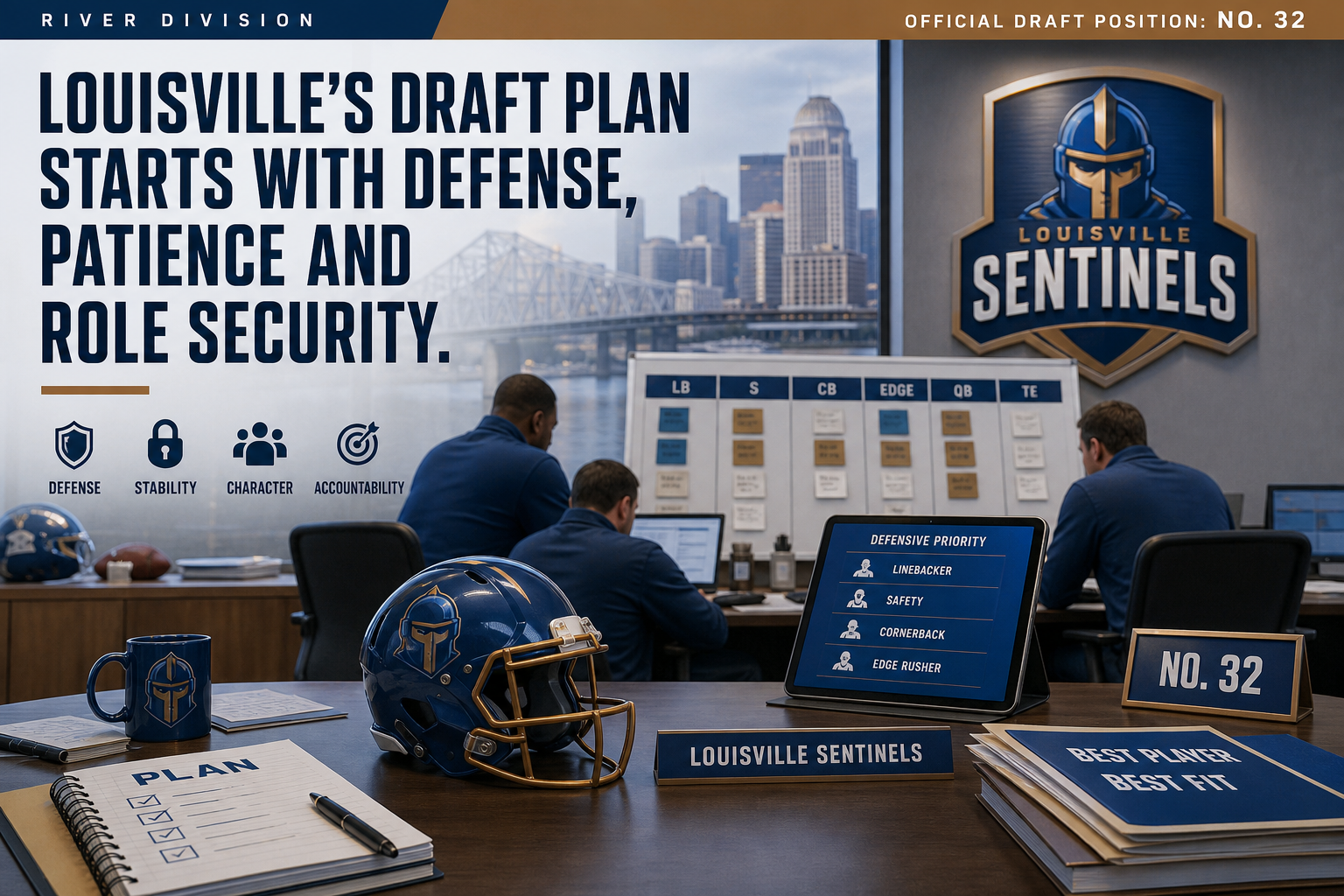
The Tony Dungy-inspired CGL coaching model for the Louisville Sentinels is trying to turn the No. 32 draft slot into an advantage: patience, not panic. That was the consistent message in a public pre-draft interview ahead of the inaugural 36-round startup draft, where the Sentinels’ approach centered on defense, role security and a roster built to function without constant adjustment.
Asked about drawing 32nd in the lottery, the model’s answer was simple: “You always respect the order you’re given.” The coach framed the spot as workable because it sits near the turn of the draft, where a team can wait for the board to come to it instead of forcing an early decision. “At 32, you’re near the turn, so you have to be steady and prepared,” the coach said. “It’s not a bad place to build from if you stay disciplined and don’t chase the board.”
That philosophy matches the roster template the Sentinels said they want to build. The public emphasis was on “reliable defenders, smart players in the secondary and at linebacker,” plus an offense that “protects the football and supports the team.” In plain terms, the Louisville Sentinels coaching model is prioritizing positions that shape how a defense plays every week: linebacker, safety, corner and edge rusher. Those are the spots the coach said “help set the tone for how we want to play.”
The offensive exceptions were narrow and conditional. Quarterback and tight end were described as worthwhile only “if the value is right and the role is stable.” That is less a departure from the defensive foundation than a test of discipline: the team will consider offense, but only if it does not crowd out more replaceable defensive help. In a 36-round startup, that matters because early mistakes can echo for months.
The coach also made the draft-board logic explicit. “The starting point is always trust and role security,” the model said. “If a player helps us right away and still gives us long-term value, that’s hard to pass up.” The added caution was just as important: “We won’t ignore the positions that are harder to replace.” In effect, Louisville is describing a draft process that weighs immediate production and dynasty value together, but gives priority to players whose weekly job is clear.
That preference for certainty showed up again in the discussion of lottery position. At No. 32, the coach said the team should be “patient in a good way.” The follow-up version of that thought was even more direct: “At 32, you let the draft come to you and make sure the picks fit the team instead of forcing something early.” That is a classic counter to reach risk: if a player does not fit the intended role, the better move may be to wait.
The coach’s preseason commentary also offered a small but useful clue about evaluation standards. In the Aug. 6 Hall of Fame Game, Carolina beat Arizona 33-30. On the verified performances provided, Haynes King finished 21 of 34 for 180 yards and two passing touchdowns, added 39 rushing yards and scored the winning 5-yard rushing touchdown. Carson Beck went 15 of 19 for 188 yards and a touchdown. Kedon Slovis was 9 of 10 for 106 yards and a touchdown. Jalen Brooks had three catches for 99 yards.
The coach singled out King’s composure: “Haynes King showed poise with his arm and his legs, especially in a close game where he finished it himself.” But the larger point was restraint. “It’s one preseason game, so I wouldn’t rush to rewrite anything,” the coach said. That is consistent with the broader draft posture: note the performance, do not overreact to it, and require repetition before any evaluation moves.
Of the players mentioned, the public record here still treats them as preseason evaluation context rather than firm draft anchors. The coach’s own standard suggests why. For a performance to matter more, it would need to repeat “against live pressure,” with “the same poise, the same ball security, and the same command of the game.” In other words, one efficient night may be informative, but it is not yet decisive.
What Louisville says it wants, then, is not a splashy identity but a stable one. “We want a team that’s disciplined, tough to move, and dependable week to week,” the coach said in the closing line. That sentence captures the whole model: speed on defense, players who know their jobs, and an offense that supports winning football without making the team volatile.
The open question is whether the draft board will cooperate. From No. 32, the Sentinels may have to choose between waiting for the clean fit and taking the best value available at a position of need. The public evidence suggests they are comfortable with that tension. The next thing to watch is whether the team follows the stated order of priorities once the inaugural draft actually starts.