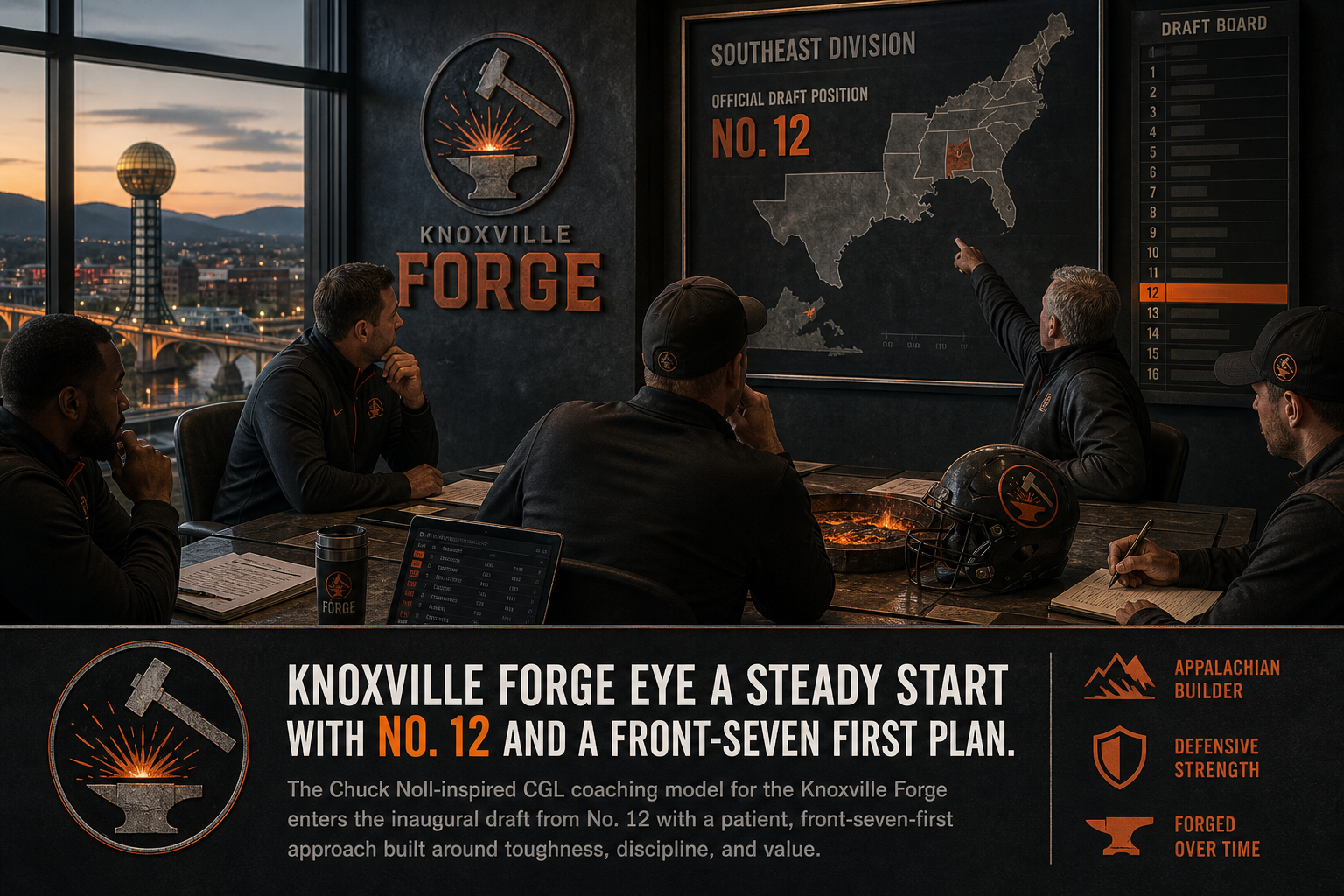
The Chuck Noll-inspired CGL coaching model for the Knoxville Forge arrives at the inaugural draft with a clear edge of purpose and a slot that is not ideal, but usable. No. 12, he said, is “workable.” It is not the top of the board, but it is close enough to begin with a player who fits and keep the roster moving in order.
For the Forge, the assignment is bigger than a single pick. In a 36-round startup draft, the first job is to establish a foundation. That means the front of the team first, a roster built from players who can hold up week after week, set a tone, and give the rest of the group something solid to lean on.
That preference shows up in the positions he named without much hesitation: defensive front players, edge pressure, and linebackers who can play with discipline. After that come running backs and dependable receivers, with young players earning notice if they have a real path to growing into the role. It is not a rigid script so much as an ordering of trust — the hard places to fill first, the steadier pieces next.
The Knoxville Forge coaching model did not present the draft as a choice between impatience and passivity. He framed it as restraint with judgment. “You don’t force a draft because of one slot,” he said. “You take the player who makes sense and keep your patience.”
That line fits the rest of his public comments. He wants the best football player, but not at the expense of the roster’s long view. If the board presents a defensive front player with the right value, he is prepared to move. If not, he will stay with the best player and keep the build sound. The goal, in his words, is a team that can stand up over time.
There was a measured tone to the way he spoke about balance, and it extended beyond the front seven. When asked how he would handle a clear offensive value early, he did not dismiss it. A better player is a better player, he said in substance, if he is reliable and fits the long view. The position preference matters most when the board is close, because certain spots are harder to fill and shape the team. But it does not outrank football sense.
That idea of reliability came up again when he described the traits he looks for in a long startup draft: role security, steady usage, good technique, and enough durability to stay on the field. He wants players who do their job the same way every week. Flash has a place, but dependable production, as he put it, usually comes from players who earn snaps, handle the work, and do not need everything perfect to contribute.
The Forge’s public identity, then, is not flashy. It is deliberate. “That we’ll build it the right way. Tough, disciplined, and patient,” he said. “We want players who earn trust, develop steadily, and help create a team that can stand up over time.”
That philosophy held steady even when the conversation turned briefly to the Aug. 6 Hall of Fame Game, where Carolina beat Arizona 33-30. Looking only at the verified performances he was given, he said Haynes King showed competitive toughness and mobility, while Carson Beck was efficient and Jalen Brooks made a play down the field. But he treated it as a small note rather than a major shift. One preseason game, he said, does not move a player very far.
For Knoxville, the larger picture is still the one that matters. The Forge are in the Southeast Division, holding the No. 12 spot in the inaugural draft and preparing for a 36-round build. The coach’s public preference list is plain enough: front-seven strength, discipline, and dependable production before the rest. The draft will test how often patience and urgency can coexist.
The question now is whether the board will let the Forge stay true to that plan, or whether the first meaningful turn in the room will come sooner than expected.