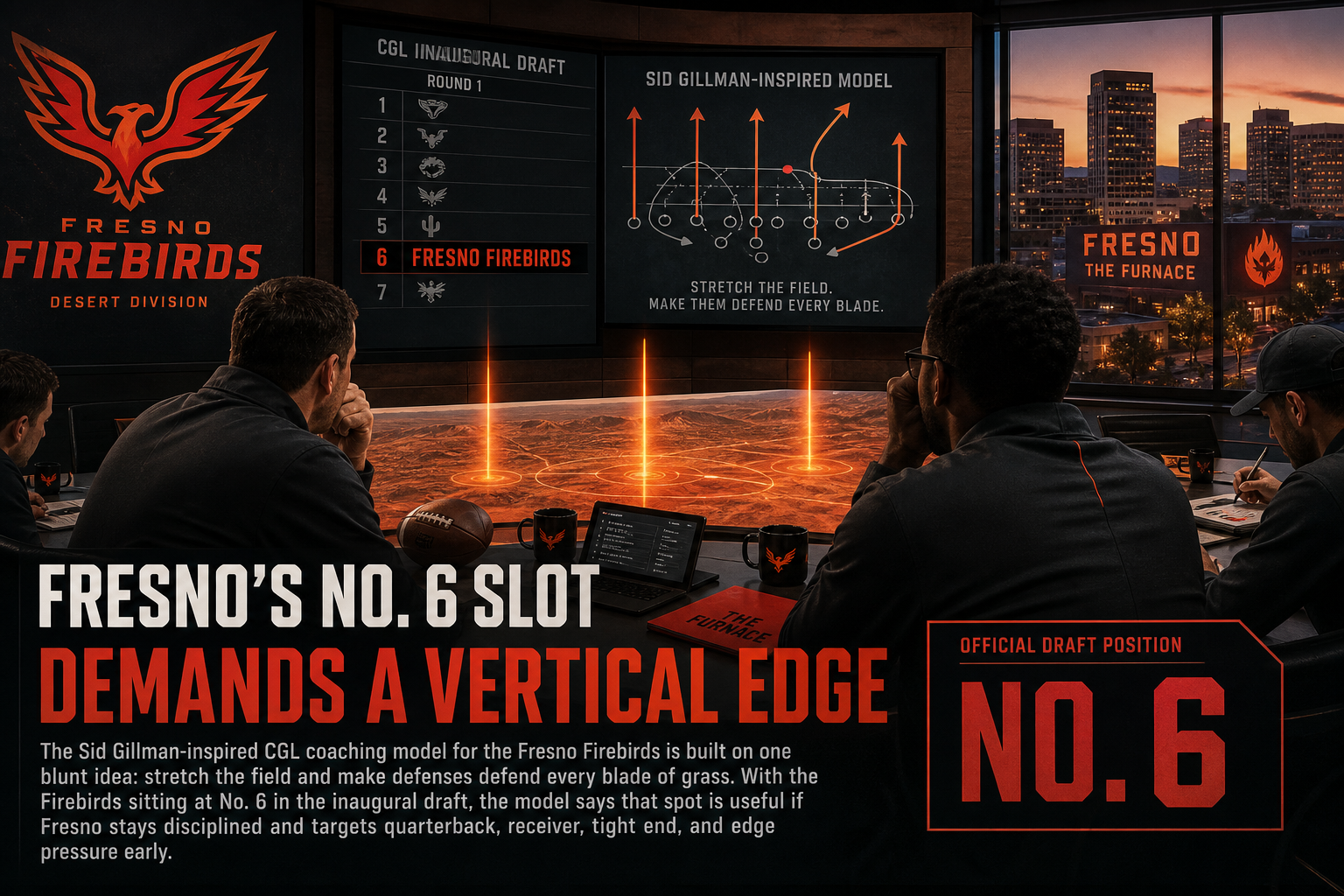
No. 6 is not a luxury seat. It is a working seat. That’s the message coming from the Sid Gillman-inspired CGL coaching model for the Fresno Firebirds, and it sets the tone for how Fresno may attack the inaugural 36-round startup draft.
The model calls the draft slot “a workable spot,” but not one that lets a team sit back and dream. The goal is plain: build a roster that can stretch the field in every phase. That means a premium quarterback if the board gives one to you, true separation at receiver, a tight end who changes coverages, and pressure players who make the other team speed up. In other words, Fresno wants stress points, not filler.
That is the heart of the Firebirds’ approach. The model said the opening rounds are where quarterback, receiver, and tight end matter most, with edge pressure right behind them. The logic is simple football: a quarterback who can drive the ball, a receiver who wins down the field, and a tight end who bends coverage can force defenses to declare themselves. Add a rusher who changes protection rules, and you’ve got a team that can make the other sideline work for every snap.
The No. 6 pick changes the clock, not the plan. Fresno is not chasing names for the sake of noise. It wants value before the rest of the room sees it. If the right quarterback is there, the model is ready. If not, a receiver, tight end, or edge player who truly shifts the field stays in play. That is the difference between drafting with discipline and drafting like you’re already behind.
The preseason evaluation notes from the Aug. 6 Hall of Fame Game support the same theme, but only as context. Carolina beat Arizona 33-30, and the verified performances highlighted different kinds of stress: Haynes King’s dual-threat day, Carson Beck’s efficiency, Kedon Slovis’ command on limited throws, and Jalen Brooks’ vertical production. But the model was careful not to overreact. One August game can confirm a trait; it should not rewrite a board.
That restraint matters. The Firebirds’ model is not looking for a flash that fades. It wants repeatable stress. It wants a passing game that can threaten coverage at every level and a defense that has to account for speed off the edge. That’s a vertical-team blueprint, and it’s not subtle.
The obvious counterargument is that No. 6 can tempt a team into waiting too long. Fair enough. But the model’s answer is firmer than that: stay selective, stay aggressive when value meets fit, and don’t let the board strip away the positions that change games.
The verdict is clear. Fresno doesn’t want to win the draft room by being cute. It wants to win it by taking the players who force the field to open up.
Prediction: if the Firebirds stay true to this model, their first big swings will come on quarterback, receiver, tight end, or edge — and probably not by accident.